

Cabot Beach, Malpeque
In October 1770, a storm‑battered ship called the Annabella ran aground near this shoreline. Some 60 families whose names included Allanby, Carr, English, Inglis, MacKendrick, MacNeill, MacMillan, MacIntosh, MacArthur, MacDougall, MacGougan, MacKay, MacKenzie, Murphy, Montgomery, Sinclair, Stewart, Smith, Ramsay, Taylor and Woodside reached land safely. Still, overnight, the storm destroyed the ship and most of their supplies. With winter approaching, survival depended on help from local Acadians, who offered shelter and shared hard‑won knowledge of the land and sea. A monument stands at the entrance to Cabot Beach Provincial Park to honour this story of resilience, cooperation and new beginnings.
The stretch of white sand and rolling dunes you see at the beach today was once known as Royalty Point. It formed part of the larger Darnley Point Farm. In March 1971, Sidney and Caroline MacGougan sold 16 acres to the Province, protecting this shoreline for generations to follow as Cabot Park.
You May Also Be Interested
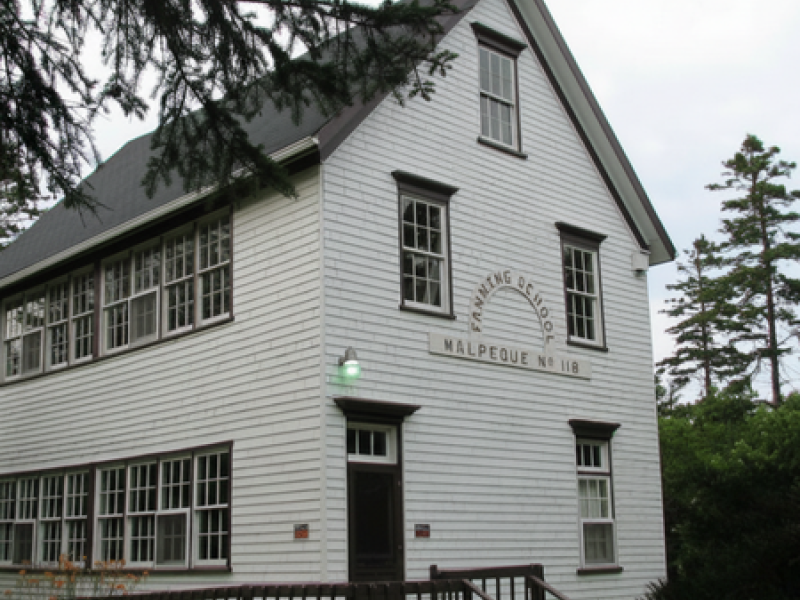
Fanning School
Built in 1794, the Fanning Schoolhouse is a rare surviving example of a two‑storey schoolhouse on Prince Edward Island. Named for Governor Fanning, it served as one of the Island’s earliest formal grammar schools. Among its notable teachers was Sir Andrew MacPhail, a respected scholar and writer. Classes continued here until school consolidation in 1969. In 1993, the building was relocated to Cabot Beach and carefully restored, preserving its legacy as a place of learning and community life.
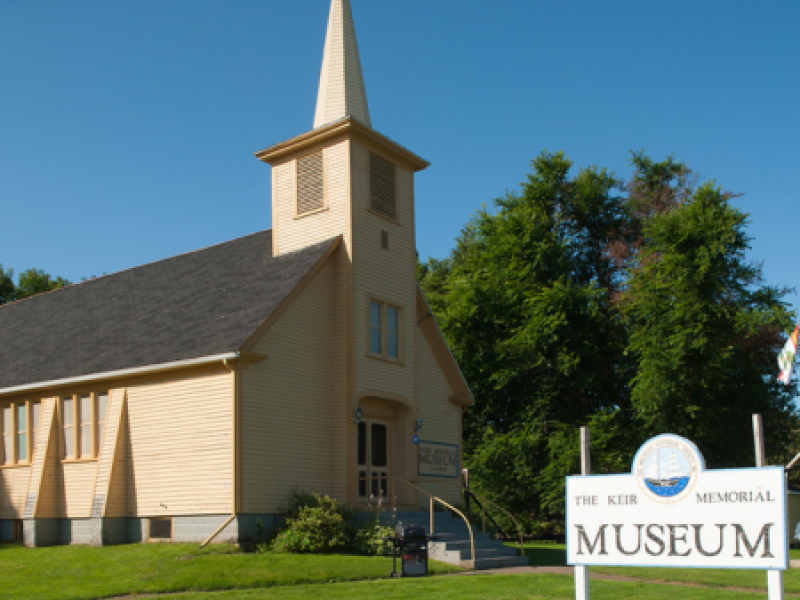
Keir Memorial Museum
2214 Route 20, Malpeque
Less than four kilometres from the park stands the former Keir Memorial Presbyterian Church, built in 1927. Today, it serves as a museum where the everyday stories of this community come to life. Inside, artifacts trace more than two centuries of local shipbuilding, fishing, and farming history. Step deeper into the story of the Annabella shipwreck, stand before an 1887 horse‑drawn hearse and see a quilt stitched in part by Lucy Maud Montgomery herself. Each object offers a glimpse into the lives of those who shaped this area.